Razer or BuddyPad? This duel pits two radically different visions of the gaming mouse pad against each other. On one side, the green snake brand, a global gaming icon with its Goliathus, Strider and Atlas. On the other, BuddyPad and its original designs that turn your desk into a work of art. We tested everything for you.
The Razer universe: raw performance or premium marketing?
Razer and BuddyPad: two opposing positionings
Razer builds its identity around a promise: ultra-performant gaming peripherals for players who want excellence. Their mouse pads are designed with a surface obsession, each fabric optimized for specific sensors, in collaboration with pro players. It’s a promise of pure performance, sold with premium packaging and a logo recognizable at first glance.
BuddyPad starts from a different conviction: performance and design aren’t incompatible. BuddyPad gaming pads use a high-density fabric that covers the needs of 95% of gamers, while offering exclusive visuals (manga, fantasy, minimalist) that Razer will never offer in its catalogs.
Razer pads overview in 2026
Razer Goliathus Chroma: the unbeatable classic
The Razer Goliathus Chroma is Razer’s reference in Extended format (up to 3XL). Its micro-textured fabric surface offers an excellent speed/control compromise, available in Speed (smoother surface) and Control (grippier texture) versions. Price: around $40. It remains one of the most-used surfaces in global competition.
Razer Strider: the hybrid soft/hard pad
The Razer Strider is a real innovation: a hard surface on top, a soft base underneath. Result: the precision of a hard pad with the comfort of a soft one. Available up to XXL. Price: between $50 and $65. If you’re stuck between speed and control without wanting to choose, this is it.
Razer Atlas: the tempered-glass pad for pros
The Atlas is in a class of its own: an ultra-thin tempered-glass pad (about 4 mm), ultra-smooth surface for maximum speed, compatible with all sensors. Easy to clean, near-indestructible. Price: around $70. It’s the choice of FPS players seeking extreme glide. Nothing comparable at BuddyPad.
Razer Firefly V2 Pro: RGB and wireless charging
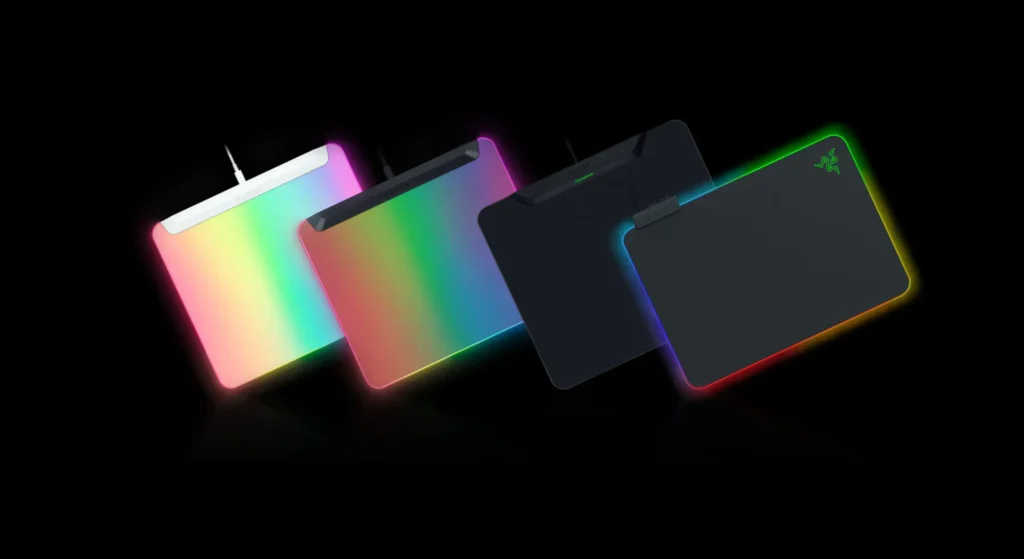
The Firefly V2 Pro is Razer’s premium RGB model, fully lit across its entire surface, Chroma RGB compatible. It even integrates a Qi wireless charging system for your compatible mouse. Price: $120 and up. A very specific niche, far from BuddyPad territory.
BuddyPad vs Razer range comparison table
| Criterion | BuddyPad XXL | Razer Goliathus Chroma | Razer Strider | Razer Atlas |
|---|---|---|---|---|
| Price | $25 - 40 | around $40 | around $55 | around $70 |
| Material | High-density fabric | Micro-woven fabric | Hybrid soft/hard | Tempered glass |
| Surface type | Versatile | Speed or Control | Hybrid (both) | Extreme speed |
| RGB | No | Yes, Chroma | No | No |
| Stitched edges | ✓ | ✓ | ✓ | N/A (hard) |
| Design | 20+ exclusive visuals | Razer logo + RGB | Neutral black/gray | Transparent/white |
| Thickness | 3 to 4 mm | 3 mm | 2.5 mm | Ultra-thin |
| Maintenance | Hand-washable | Hand-washable | Damp wipe | Easy cleaning |
| Mouse compatibility | All optical sensors | All sensors | All sensors | All sensors |
Surface and glide: Razer fabric vs BuddyPad fabric
Speed surface: for high-sensitivity FPS players
The Razer Goliathus Speed is a global reference for high-sensitivity FPS (400 to 800 DPI, wide movements). The smooth texture allows fast, fluid glides with minimal resistance. If you play CS2 or Valorant at high sensitivities, this surface is genuinely optimized for that.
Control surface: for the precision of strategists
The Goliathus Control increases texture to slightly slow movement and improve micro-adjustment precision. It’s the choice of strategy players (RTS, MOBA) or snipers who prioritize clean stops. BuddyPad offers an intermediate surface that suits both styles without being perfect for any in particular.
RGB and tech: is it really useful?
Razer’s Firefly V2 Pro and Chroma RGB are strong, visually spectacular marketing arguments. But let’s be honest: LEDs don’t improve your mouse’s performance one bit. They’re “setup aesthetics” features that cost an extra $35 to $80. BuddyPad makes the opposite choice: invest in fabric quality and unique artistic designs rather than LEDs.
Design: the green brand against BuddyPad’s universes
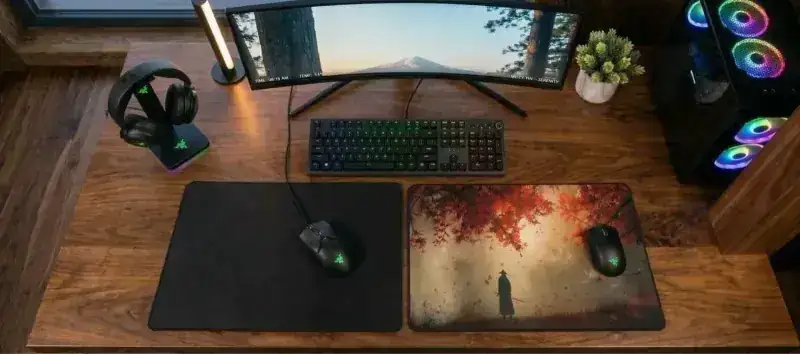
Razer offers its pads in an ultra-reduced palette: black with green logo, black with RGB, or white for the Atlas. It’s intentional - the brand bets on logo recognition rather than personalization. BuddyPad does the exact opposite: each pad is a unique design, from the samurai warrior to cherry blossoms via dark fantasy worlds. If you want your desk to say something about you, the choice is obvious.
Price: Razer premium vs BuddyPad accessible
The Goliathus Chroma starts at around $40, already $5 to $15 more than the BuddyPad XXL. The Strider runs to about $55, the Atlas to about $70, the Firefly V2 Pro $120 and up. For everyday non-competitive gaming use, BuddyPad offers an unbeatable design/performance/price ratio. The question is simple: what are you paying extra for at Razer? The brand, the optimized surface, or the LEDs.
Our verdict: Razer or BuddyPad based on your profile
Choose Razer if…
You play at a serious competitive FPS level and want the most optimized surface possible (Goliathus Speed or Control). You want a hybrid soft/hard pad that’s one of a kind (Strider). You’re seeking maximum glide on tempered glass (Atlas). Chroma RGB synced with your whole setup is a priority. The Razer logo is part of your gaming identity.
Choose BuddyPad if…
You want a setup that looks like you: manga, fantasy, minimalist - universes Razer will never touch. You play at a casual to semi-competitive level and the surface difference between Goliathus and BuddyPad is imperceptible to you. Your budget stays under $40. You’d rather support a specialized boutique than a US multinational.
To go further in your comparisons, also see our BuddyPad vs Logitech, BuddyPad vs Corsair and BuddyPad vs SteelSeries articles.
FAQ - Razer pads vs BuddyPad
Is the Razer Goliathus better than BuddyPad for gaming?+
For competitive FPS gaming at very high sensitivity, the Goliathus Speed fabric offers slightly superior glide. For casual to semi-competitive gaming (MOBA, RPG, daily gaming), BuddyPad offers identical performance at a reduced price.
Razer Strider or a BuddyPad pad - which is better?+
The Strider is unique with its hybrid surface (hard top, soft underneath), a concept BuddyPad doesn’t offer. If you’re stuck between speed and control without wanting to choose, the Strider is relevant. Otherwise, BuddyPad offers a better design/price ratio for the majority of gaming uses.
Can you compare BuddyPad to the Razer Atlas (glass pad)?+
No, these are fundamentally different products. The Razer Atlas is a hard tempered-glass pad (~$70) for players seeking maximum speed and zero surface wear. BuddyPad is a versatile soft fabric pad ($25-40). Both meet distinct needs and don’t substitute for each other.
Is BuddyPad compatible with Razer mice (Viper, DeathAdder…)?+
Yes, totally. The BuddyPad surface is compatible with all optical sensors, whether Razer Focus Pro, Logitech HERO, SteelSeries TrueMove or others. Compatibility depends on surface quality, not pad brand.